

Connecting Across Languages

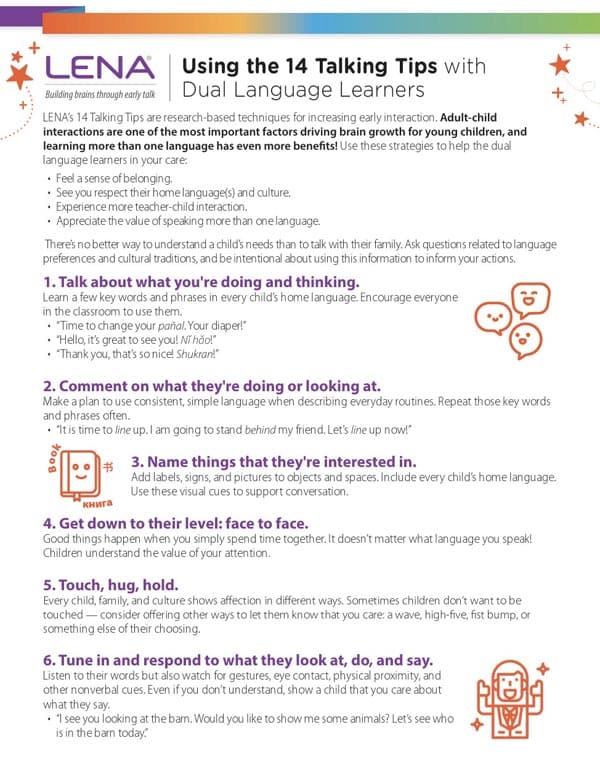
How responsive relationships unlock potential for dual language learners

A woman smiles while hugging a baby wearing colorful clothes, with another baby sitting on her lap looking forward. The scene takes place in a cozy indoor setting, likely a daycare or nursery.

Why the First Five Years Matter Matter

90% of brain growth happens before kindergarten. Conversational turns — simple back-and-forth interactions between a child and an adult — are powerful forces for growth, especially for children learning multiple languages. They can literally change the course of a child’s entire life!

During these years, dual language learners develop skills that become their foundation for:

  • Stronger bonds with family and community
  • Better problem-solving and creative thinking
  • Improved self-control and focus
  • Higher reading and math scores
  • Enhanced social skills and empathy

Dual Language Learners :
The Current Reality in Early Childhood Classrooms

Many dual language learners aren’t getting enough chances to talk and interact in their classrooms. Teachers want to connect with every child. But when English-speaking teachers don’t speak a child’s heritage language, unfortunately, they are less likely to engage in conversational turns with them.

What We Know:

  • DLLs get 7.5 fewer conversational turns per hour than English-speaking children.
  • In toddler rooms, this jumps to 14.7 fewer conversational turns per hour.
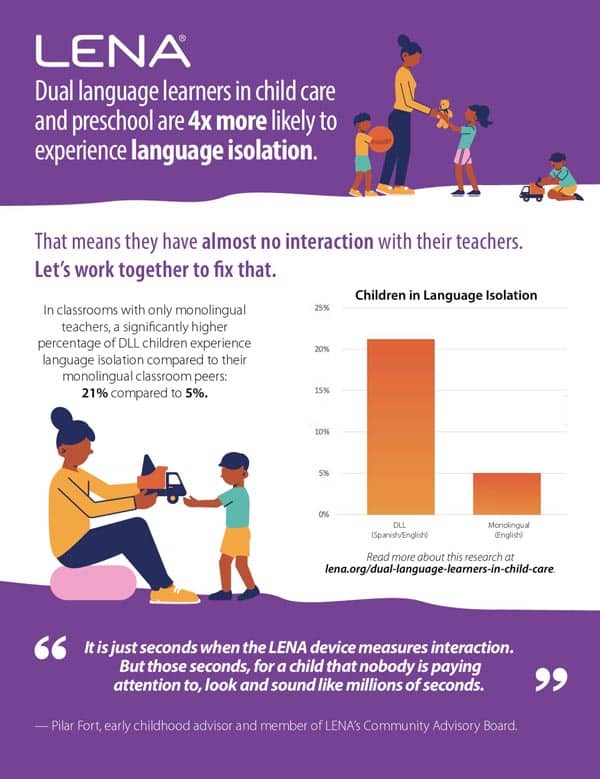
  • 21% of DLLs barely talk with teachers during the day, compared to only 5% of other children.
  • DLLs are 4 times more likely to spend most of their day without conversational turns. Researchers consider this to be “language isolation.”


Multilingualism as a Superpower

Research consistently shows that learning multiple languages provides remarkable advantages. Children who develop strong skills in both their heritage language and English demonstrate:

A smiling man holds up flashcards while a young girl with curly hair excitedly points at one. They sit at a table together, appearing to enjoy a learning activity.

Brain Development

Bilingual children’s brains become better at switching between tasks, filtering out distractions, and holding multiple ideas at once.

A woman smiles and lifts a laughing baby dressed in a light blue onesie. The baby looks down at her, and both appear happy and joyful against a plain white background.

Learning Advantages

Children become bridge-builders who help classmates from different backgrounds connect and learn from each other.

A man in a gray beanie and jacket holds a smiling toddler wearing a raincoat and a pink backpack. The man looks at the child fondly against a plain, light background.

Long-Term Success

The cognitive advantages compound over time, leading to higher test scores and better academic outcomes through elementary school and beyond.

Children need more conversational turns

Not just words

Children don’t just need to hear words. They need responsive relationships where adults really listen to their ideas, questions, and discoveries.

Every time a child and adult have a positive verbal interaction, it builds stronger brain connections. These conversations help children learn language, think better, and understand their feelings.

Research shows that dual language learners who have more conversations have:

  • Larger vocabularies in both languages
  • Better early literacy skills
  • Stronger emotional intelligence
  • Greater kindergarten readiness
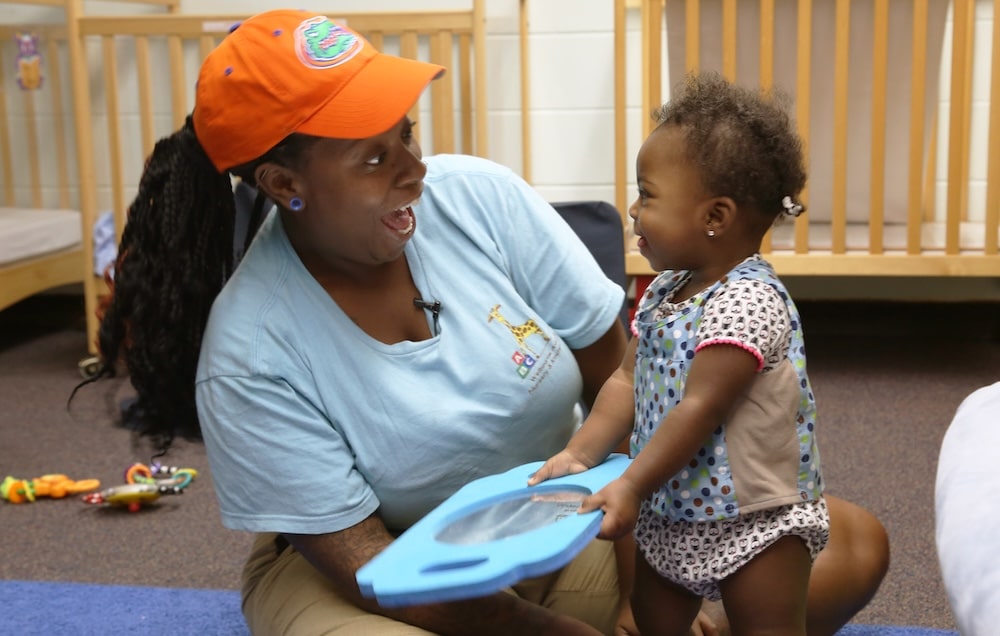
An adult and a toddler smile at each other while playing with a blue toy in a nursery, with cribs and toys visible in the background.

Measuring What Matters in Early Childhood

In today’s world, we can measure what matters and use that information to help children develop better literacy skills in early childhood.

LENA’s professional development program measures the back and forth conversations children experience with adults throughout the day. This program:

  • Shows teachers and caregivers where they’re already strong
  • Identifies opportunities to talk more
  • Guides improvements that really work
  • Tracks progress over time

The result? Children experience more brain-building conversations, and adults gain confidence in their ability to support every child’s development.

Breakthrough Results for Dual Language Learners in Early Childhood

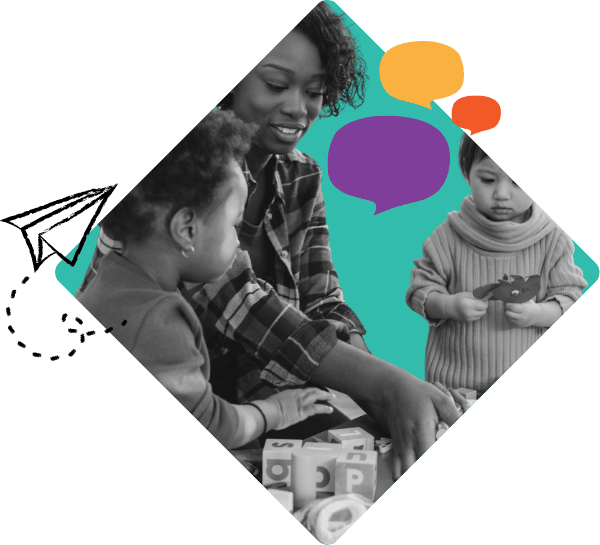
A woman and two children engage in a hands-on activity with blocks and toys. Colorful speech bubbles are illustrated above, suggesting conversation or communication. The image is displayed inside a diamond shape.
LENA Grow:
Real Results

LENA Grow helps teachers have more conversations with all children. For dual language learners, the results are amazing:

  • 22% more conversations (even higher than English-speaking children).
  • Children experiencing language isolation decreased from 21% to just 4%.
  • All children got more attention, not just some.
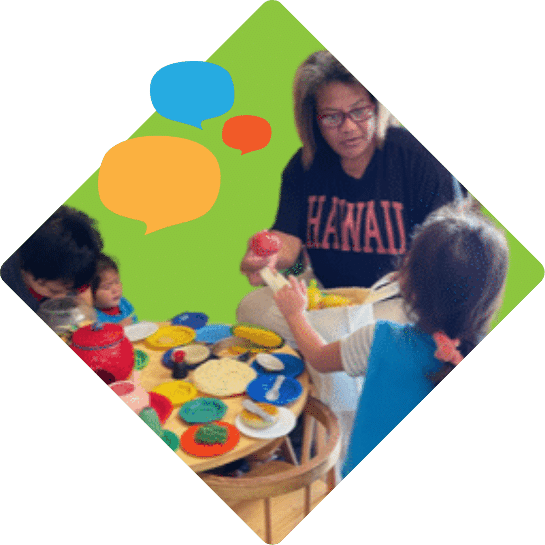
Three children and an adult sit around a table with toy food and plates, pretending to share a meal. The adult wears glasses and a black “HAWAII” shirt. Colorful speech bubbles are added above them.

The Power of Bilingual Teachers

When children are in classrooms with teachers who speak their heritage language, they experience just as many conversational turns as their monolingual peers. 

Research must continue to be conducted on the instructional practices that lead to the best early learning experiences and outcomes for DLLs. In California, the Dual Language Learner Pilot Study is a model example.

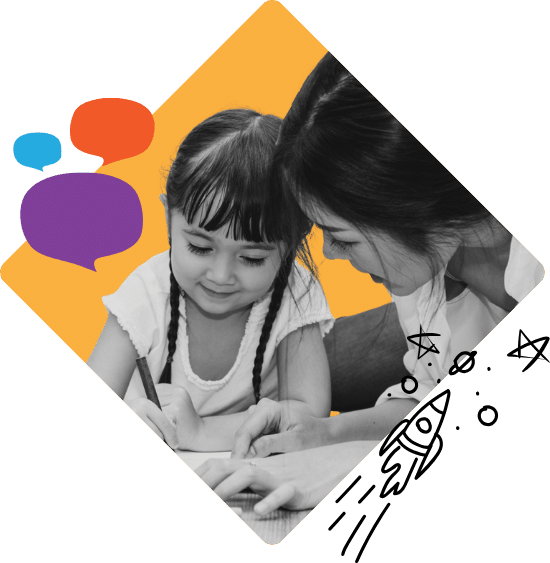
A woman helps a young girl with braids who is writing, both smiling. The image has a diamond shape with a yellow background and colorful speech bubbles in the corner.

Head Start:
Leading the Way

Head Start shows what’s possible when programs support all languages. Research suggests that Head Start’s Program Performance Standards for DLLs have yielded great outcomes for dual language learners.

  • DLLs leave Head Start understanding more words than their monolingual peers.
  • Head Start’s Planned Language Approach helps DLLs improve cognitive and executive functioning.

Resources For Supporting Dual Language Learners

Ready to Transform Children's Futures?

Ready to support dual language learners in your program? Every child deserves responsive relationships that honor their language and culture while supporting their growth. Whether you’re looking to implement LENA programs, enhance your teaching practices, or simply learn more, we’d love to connect.