A preschool classroom moves through transitions all day long. The moments in between activities. From drop-off to centers. From potty time to snack. From cleanup to nap. By the end of the day, a teacher has guided a room full of children through many transitions. And they do this every single day!
Responsive adult-child interactions with caregivers can be a cushion for preschoolers during these moments. A LENA, we call these conversational turns.
A conversational turn is a vocal back-and-forth exchange between a teacher and a child, like a question and an answer, or a comment and a responding giggle. LENA’s research shows these small exchanges build the brain connections children use for language and learning. And they’re a great way to build more safety and trust with children during transitions.
Here are three transitions where a little intention goes a long way in the classroom.
Three Preschool Transitions, Three Talking Tips
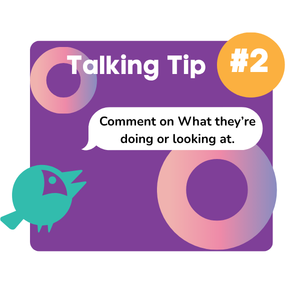
Every classroom moves through the same three kinds of transitions: arrivals and departures, personal care routines, and shifts between activities. LENA’s 14 Talking Tips, a free printable resource, offers a simple strategy for each one.
1. Morning Drop Off and Afternoon Pick Up
No two children walk through the classroom door the same way. One may burst in excitedly with news to share. Another may linger at the doorway, unsure about leaving a caregiver behind. One may come in already upset. All morning drop off moments call for a teacher’s attention, just not the same kind.
When a Child Is Happy or Comfortable
A child who’s ready to talk doesn’t need much from a teacher except a comment or question and a listening ear. It might look like commenting on something the child brought in, or asking what’s got them so excited that morning. Then pause and wait for their response.
Here’s an example for morning arrival!
“I see you brought your dinosaur backpack today. Tell me about your dinosaur.”
Or
“You look ready for a great day! What are you hoping we build at centers?”
When a Child Is Upset
A child who’s struggling may need reassurance first. Comfort. Connection. Kneeling to their eye level, along with a hand on the shoulder or a quick hug (if the child is open to that), can settle a child faster than words alone. Staying calm and warm, instead of rushing the goodbye, gives them room to settle.
Naming a feeling out loud can help too. Something like, “I can see this is a hard goodbye,” lets a child know their feelings make sense before a teacher moves toward comfort.
Here’s an example!
“I know it’s hard when your grown-up leaves. Would you like a hug?”
Or
“Let’s wave together and sing the “See Ya Later Alligator” song!”
Or
“You’ll get to paint today! Let’s wave bye and you can tell me about what you’d like to paint!”
For children who take longer to say goodbye at pickup than they did at drop-off, asking about the best part of their day, or naming something to look forward to tomorrow, can ease the shift.
Every child settles differently. Reading the room matters more than sticking to a script.
2. Preschool Activities of Daily Living (ADLs): Talk About What You’re Doing
Handwashing before snack. Zipping a jacket for outdoor time. Settling in for rest time. Even wiping noses, pouring drinks, and managing spills. A classroom runs on transitions like these. Each one puts the teacher and child in close proximity to have a conversation.
Narrating what’s happening as it happens works well here. This might look like describing each step of washing hands, or talking through the process of getting ready for naptime.
Here’s an example!
“First we get our hands wet. What comes next, soap or water?”
Or
“We’re zipping up your coat. Zip, zip, zip! Almost ready for outside.”
Turning a routine into a short rhyme or call-and-response, like counting handwashing seconds together, can make it feel like a game instead of a task.
3. Activity Changes: Sing, Tune In, and Respond
Nothing tests a classroom’s rhythm like moving from one activity to the next. Two things help ease the shift: making it a little fun, and tuning in to how a child responds.
A classroom favorite is turning the transition into a song. Something as simple as the Clean Up Song gives children a cue that a shift is coming, while turning a chore into something closer to play.
Here’s an example!
“Clean up, clean up, everybody everywhere! Clean up, clean up, everybody do your share!”
A song doesn’t replace talking with a child. Pairing it with a comment, then tuning in to how a child looks, moves, or responds, gives the moment even more back-and-forth.
Here’s an example!
“We’re putting the blocks away. Do you want to stack them or carry them to the shelf?”
Or
“Circle time is starting. Should we hop or walk to our spots?”
Tuning in means noticing however a child answers, even if that’s a giggle or a point instead of a word, and following wherever it leads.
Quick Answers on Preschool Transitions
What are some classroom transition activities for preschoolers?
- A transition song, like the Clean Up Song, to signal that a shift is coming
- Commenting on what a child is doing, then pausing for a response
- Offering a simple choice, like hopping or walking to the next spot
- Narrating a routine like handwashing, one step at a time
Why are transitions hard for preschoolers? Preschoolers are still developing self-regulation, the skills that let them shift attention and manage change without becoming overwhelmed. A classroom adds another layer: each transition means a whole group of children managing that same shift together, often at different paces, which helps explain why transitions are linked to more disruptive behavior than other parts of the day.
How can teachers make transitions easier for preschoolers? Narrating what’s happening, then pausing to let a child respond, gives children the time they need to process a shift before moving to the next step. Naming feelings during a challenging transition can help too. Check out LENA’s resource on using the “14 Talking Tips” to support emotional development.
How can talking help during classroom transitions? Talking gives a child a heads-up about what’s coming, which lowers the uncertainty that often leads to resistance during a shift. Back-and-forth talk, known as a conversational turn, has also been linked in published research to stronger emotional regulation, the exact skill a child needs most in a hard transition.
The Takeaway
Every classroom day is full of transitions. None of them require extra time on the schedule for conversation and connection. They just take a little intention! That intention adds up, supporting not just language and vocabulary, but also the social skills and self-regulation children need for kindergarten and beyond.
Download LENA’s Talking Tips for Transitions guide for more, or explore the full 14 Talking Tips to bring more conversational turns into the classroom day.