You have seen this before. Effective teacher training works in one classroom but is hard to grow across many sites. The problem is usually not the program. The problem is time, staff, and support. Coaches are busy. Class coverage is hard. Feedback can take too long. Leaders need a way to help more teachers without adding more strain.
This is a big issue in early childhood education. Teachers have full days and little extra time. Many programs face staff changes and coach shortages. Too often, professional development pulls teachers out of the classroom and gives support after the moment has passed. This is a systems problem, not a people problem.
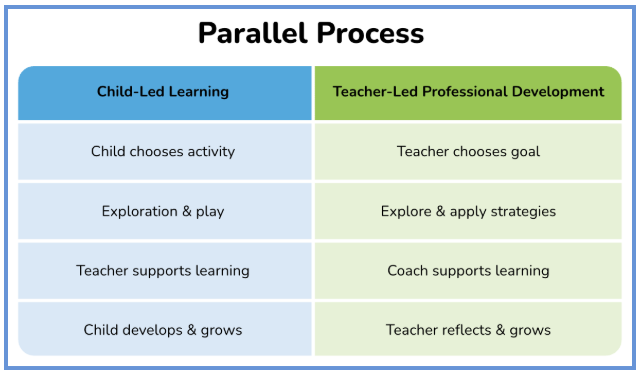
In early childhood, we understand something fundamental about learning: Children learn best when they are actively engaged — when they can do things for themselves. We design classrooms that build independence, ownership, and confidence.
But we rarely apply that same principle to teachers.
What if, instead of designing professional development for teachers, we designed it so teachers could do more of it themselves?
There’s An App for That
That is why we created a mobile app to support LENA Grow. LENA Grow still gives teachers data, reflection, goals, and support. But now teachers can use the LENA Grow App when it works for them. In conjunction with the new LENA dock and devices, teachers can process their own LENA data and then review it in the app the next day.
This shift is about creating the conditions for learning for teachers in the same way we intentionally create conditions for children.
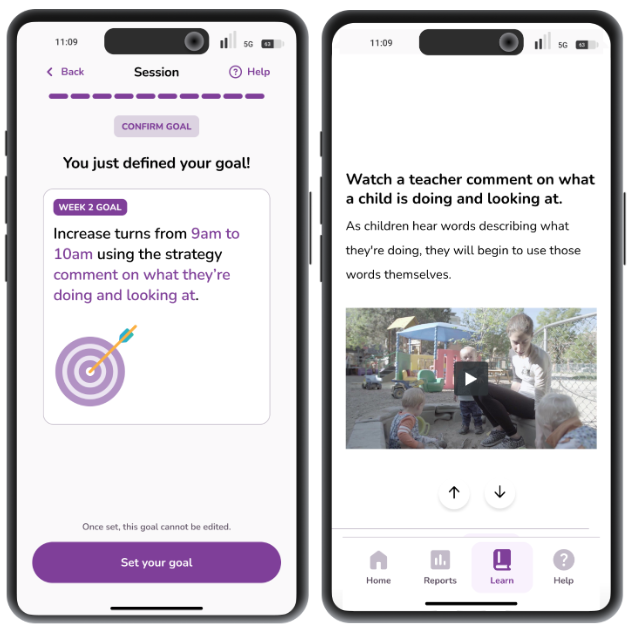
The app walks teachers through the data and helps them set specific, measurable goals. Based on the goal, teachers are presented with bite-sized strategies, shown in real classroom modeling videos, that they can apply right away.
Importantly, teachers are not just assigned goals. They choose them. This matters. Research on adult learning consistently shows that autonomy and self-direction increase engagement and lead to deeper, more sustained learning. When adults identify their own goals, they are more motivated to act, reflect, and improve.
What Autonomy Signals
This approach gives teachers more control over their learning, but it also sends them an important message:

“We trust you.”
We trust you to analyze your data.
We trust you to set meaningful goals.
We trust you to make a difference for your own children.
That trust isn’t just an idea or philosophy. It’s practical. Actionable. When teachers take ownership of their learning, coaching conversations change.
Instead of spending time on logistics, coaches can focus their limited one-on-one time on reflection and problem-solving. Teachers come prepared, having already reviewed their data, so conversations can go deeper and be more impactful.
Rethinking the Real Barrier
In many systems, there is a quiet assumption that teachers cannot take on this level of responsibility consistently at scale.
But in practice, the bigger issue is system design, not teacher capacity. We have not always created the conditions and systems that enable teachers to do this work independently. Without clear tools, time, and structures, even strong educators default to compliance instead of ownership.
When we change the system, we unlock what teachers are already capable of. They see their strengths, and they set their own goals to make their strengths stronger. They get to see the impact they are making based on autonomous decisions. It’s empowering!
Flexibility Increases Accessibility
The app also gives programs more choices. Some may use weekly coaching. Some may choose flexible coaching. Others may use a teacher-led model. Each option helps programs match support to their staff, schedule, and budget.
That kind of flexibility is a huge win for early childhood programs. They can bring LENA Grow to more classrooms without needing the same level of coaching in every room. If staffing changes or schedules shift, the learning can keep going. Timely app notifications remind teachers to conduct LENA Days and let them know when their data is ready.
The Same Proven Program

Across LENA Grow, 96% of teachers recommend the program, and this continues to be true when they use an app to access their data. The core of LENA Grow has not changed. What has changed is access and ownership.
We work so hard to give children autonomy, structure, and the right conditions for learning. When we give teachers the same thing, we don’t just make professional development more scalable. We make it more meaningful.
If you want to bring strong professional development to more teachers, this is the question to ask:
What could change if teachers could lead more of their own learning?
App-based LENA Grow can help make that possible.