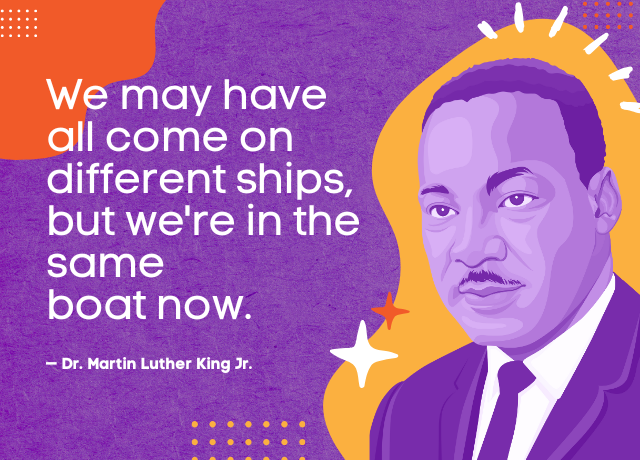
Dr. King didn’t lead the movement to dismantle segregation with grand gestures alone. He understood that systemic change happens through countless individual actions, repeated daily, by people committed to doing what’s right.
Honoring MLK Day in early childhood education gives us time to reflect on how his mission plays a part in ours every day. We believe that every child deserves access to opportunities they need to thrive, regardless of race, socio-economic status, or heritage language. For those building inclusive early childhood education programs, honoring that legacy means asking hard questions.
Are all children getting what they need to develop language, prepare for kindergarten, and build confidence in their voice? Are they getting what they need to thrive socially and emotionally in school and life?
Among the things children need: plentiful verbal interactions with their teachers. Research shows that too many children are experiencing too few of them. Especially if they’re in child care or early education programs. It doesn’t have to be this way. The folks devoted to doing this work every day can ensure that every child has a voice.
Access to Education as the Foundation
Dr. King dedicated his life to tearing down barriers. In 1964, accepting the John Dewey Award, he declared education “the road to equality and citizenship.” Not a privilege. Not a reward. A right that every child deserves, no matter their race or background.
A lot has changed since King spoke those words. We now understand that education doesn’t wait for kindergarten. It starts the moment a baby is born. It starts with coos and babbles and how a caregiver responds. And it goes with them from toddlerhood to preschool and beyond. Every verbal back-and-forth exchange between an adult and child lays the foundation for everything that comes after. These interactions build brain connections that make reading, learning, and thinking possible.
We can now measure these moments and see which children’s voices are being heard — and which are not.
The data from a program such as LENA Grow can help early educators see classroom imbalances and develop strategies for including every child. Which children are not getting the interaction they need?
When Voices Go Unheard in Early Childhood
Visit almost any early childhood classroom. You’ll likely see children talking, playing, learning. But if you stay awhile, you’ll notice that some children engage in back-and-forth conversations all day long. Others? Almost silence. Their voices barely get heard.
The quieter children. Children learning English alongside their heritage language. Those who don’t demand attention or interrupt. The compliant ones. They’re the ones who miss out on the interactions their brains desperately need. The relationships they need.
When a child’s voice goes unheard day after day, they miss the language practice that prepares them for kindergarten. The confidence that comes from being listened to, responded to. The brain-building exchanges that shape how they learn and think.
Dr. King fought for an America where all children have equal opportunities to thrive. Where they all have access to plenty of positive responsive relationships from caregivers and educators. An America where all children are heard.
He encouraged us to help make that happen.
And the truth is your daily choices break barriers and open doors of opportunity for every child, one interaction at a time.
What Happens When Children Are Heard
Amazing things happen when all children feel seen and heard. When caregivers are made aware of which children need a little more conversational TLC, they find the time. They make the time. Whether it’s those tiny moments during transitions from one activity to another, a 1:1 conversation in the reading nook, or asking them more questions during circle time. When they feel like their voices are heard and responded to, quieter children start talking more. Dual language learners feel more confident to speak up or approach their caregiver with questions. Language skills explode. Social connections deepen. Confidence builds.
Most touching is that these children learn that what they have to say is worth hearing. That they belong. That their voice counts.
This is what Dr. King fought for.
Making Every Interaction Count
When that first child walks through your door, you have a choice. Will you ask about their weekend? Will you notice the quiet one washing hands alone?
Nearly 40% of children start kindergarten one to three years behind in critical readiness areas, including language and literacy. This makes the need for more high quality adult-child interactions even more important.
Importantly, creating space for conversations with every child is an opportunity to drive early childhood forward in ways that ripple across generations!
You’re building brains. Shaping futures. Proving to children that their words matter. That they matter.
You’re creating an inclusive early childhood environment where access to responsive relationships isn’t just for the children who are the loudest.
Sometimes the children who need you most are often the ones who ask for you least. Find time for them. Listen when they speak. Respond like their voice is the most important sound in the room.
Because it is.
If you or others in your organization struggle to make space for every child’s voice, we hope you’ll learn more about how we can help by visiting our LENA Grow page!