Confidence in young children doesn’t always show up in big moments. Sometimes it shows up in small choices throughout their day. In persistence. In the simple act of trying something hard on purpose.
If you’re a caregiver, family member, or teacher of a little one, you’ve likely seen it happen.
Grabbing the more challenging puzzle. Falling down on the playground and popping back up, mostly unphased. The child who followed the pack in September but is now organizing activities with their peers in May. The “big jump” off the playground platform onto the ground.
But when (and why) do they start internally saying ‘I can’?
Self-Confidence in the First Five Years
Earlier than most people realize.
Research shows that the conversations children have with adults in their first five years are a powerful force shaping their self-esteem.
We also know that children begin forming their sense of self-esteem long before they can vocally express it. By age 5, a child’s self-esteem is already well established. The infant, toddler, and preschool years are shaping how children see themselves. Whether they believe their voice matters. Whether they trust that trying is worth it.
That’s a big thing to happen in such a small window of time.
The adults in a young child’s life during those years — parents, grandparents, caregivers, teachers — are part of building that foundation every day. Not through grand gestures or formal lessons, but through conversation. Responsive adult-child interaction.
Conversation and Confidence in Early Childhood Are Connected
LENA’s research shows that children who experience more conversational turns show higher levels of confidence. The more back-and-forth talk, the more a child sticks with tough tasks, makes decisions for themselves, and the more they ask to try new things.
Importantly, conversational turns are either adult-initiated or child-initiated. When a child is the one to start the conversation — reaching out, babbling, asking, pointing — that act itself is a sign of self-esteem. A child who initiates is a child who already believes they’re worth listening to.
The Children Who Needed It Most
So what happens when you put this research into practice?
In the case of child-initiated turns, not every child initiates equally. In any classroom, some children reach out constantly. Others hang back. They watch. They wait.
When teachers focus intentionally on increasing back-and-forth interactions — especially with the children who initiate least — those children start reaching out more. They start conversations. They ask questions. Their behaviors change. They take more risks because they feel more confident and it feels safer to do so.
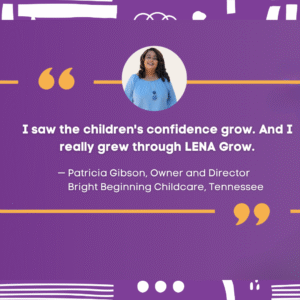
With LENA Grow, our 5-week, job-embedded professional development program, every cycle of the program generates objective data on classroom interaction. Not only for individual teachers, but also across an entire program. And that data supports children as well as the adults responsible for them!
Some children come into the LENA Grow program experiencing less interaction than their peers. The research is clear: Those are the children who see the biggest increases in conversational turns, and they’re also the ones who show the biggest boosts in self-esteem.
What Program Leaders Need to Know
This matters beyond the individual classroom.
For directors, executive directors, and program leaders, the question isn’t just whether children are developing confidence. It’s whether your program can see it happening.
You’re making decisions every day about where to invest — in staff, in curriculum, in professional development. And you’re often doing it without clear visibility into what’s actually happening between teachers and children in your classrooms. You can observe. You can survey. But measuring the quality of individual teacher-child interactions, at scale, across an entire program? That’s historically been out of reach.
Knowing, specifically and objectively, how much back-and-forth interaction each child is experiencing throughout the day opens so many doors of possibilities!
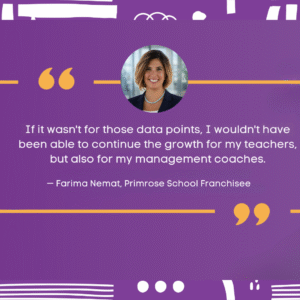
When leaders have access to that kind of data, they can support their teachers differently. They can identify where children need more. They can make decisions grounded in evidence. And they can demonstrate impact — to families, funders, and school boards.
Measurable Now, Meaningful Forever
The impact on children’s confidence is measurable.
In classrooms where teachers focused on increasing conversational turns through the LENA Grow professional development program, children were more likely to be rated as “very frequently” showing confident behaviors. The kind we talked about at the beginning of this article, that show up in everyday moments. Twice as many children chose to take on tasks they found difficult. Nearly twice as many were initiating play with other kids. More children were making their own decisions. More were trying again after something didn’t work the first time.
In other words, more children were doing harder things on purpose.
A child who believes they’re capable, worthy of connection, and able to try hard things is a child who is better equipped to navigate the emotional demands of growing up. Self-esteem formed in the early years doesn’t stay in the early years. It travels with children into elementary school, into adolescence, into the relationships and challenges they’ll face long after they’ve left early childhood.
For program leaders, that’s worth paying attention to. The outcomes your program produces aren’t just academic. They’re emotional. They’re relational. And they start much earlier — and run much deeper — than traditional measures of school readiness tend to capture.
It’s Happening Right Now
The moments that shape a child’s sense of self don’t announce themselves. They happen during snack time and story time and the walk in from the parking lot. They happen when a teacher pauses and waits for a response. When a caregiver gets down to a child’s level and really listens. When a quiet child reaches out and someone reaches back.
That’s the work. And it’s already happening in your classroom, your program, your community.
The research is here to help you see it — and build on it.
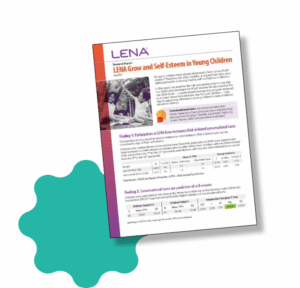
Download the full research report to explore all three findings on conversational turns, self-esteem, and what’s possible when we measure what matters.