Are you an infant or toddler teacher? Responsive care is likely very important to you. And teacher-child interactions, or conversational turns, are such an important part of responsive care.
When people hear the term “conversational turns,” they often picture preschool classrooms. Something that happens during preschool activities like circle time or group discussions. But conversational turns happen with infants and toddlers too! They just look and sound a bit different. With infants and toddlers, back‑and‑forth exchanges happen through sounds, gestures, facial expressions, and early words.
They’re already communicating. But how do you keep the conversation going?
What Infant and Toddler Responsive Interactions Look Like
A conversational turn is a back-and-forth vocal exchange between an adult and a child. A baby who coos back when they hear your voice. A toddler who answers your question (or just grunts). A squeal.
Even gestures can play a big role in creating conversational turns. For infants and toddlers, vocal exchanges often start with a child’s gestures or facial expressions. Smiles, points, feet kicking. They can lead to turns. Gestures are something the Harvard University Center on the Developing Child emphasizes as well.
Short phrases, sounds, and responsive replies to children’s coos and babbles keep the back‑and‑forth going.
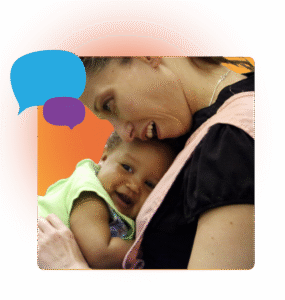
Responsive care for infants and toddlers looks like adults noticing children’s cues (sounds, movements, facial expressions, gestures) and responding with warmth and comfort.
This happens during everyday classroom routines, where adults follow the child’s lead, provide a sense of safety, and support back-and-forth interaction.
“I see you kicking! Your legs are moving fast!”
“Uh-oh, the blocks fell down. Let’s try again.”
Let’s Tackle Some Low-Talk Times
Here at LENA, we measure conversational turns. Children wear a little device for the whole day, and the device counts how many turns they have with their teachers. This gives us some amazing insights into classroom language environments.
One of those insights is this: Some activities lend themselves to conversational turns more than others.
Three of the most common low-talk times in infant and toddler classrooms are mealtimes, transitions, and outdoor play.
Here’s why — and what one small shift can look like in each.
Mealtimes: More Than Just Managing the Mess
“I’ll just change the diapers, or I’ll just go clean the table.” — Farima Nemat, Franchisee, Primrose School of Littleton, Colorado
During a recent LENA webinar, Primrose School franchisee Farima Nemat, described what disengaged mealtime supervision can look like. A teacher so absorbed in the task in front of them that they default to wiping and clearing rather than connecting.
It’s easy to see how it happens. Who’s eating, who’s spilling, who needs more? The management side of feeding a group of very young children is real. But the table is rich with opportunity.
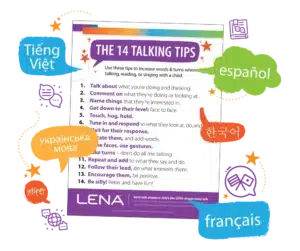
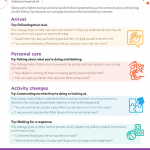
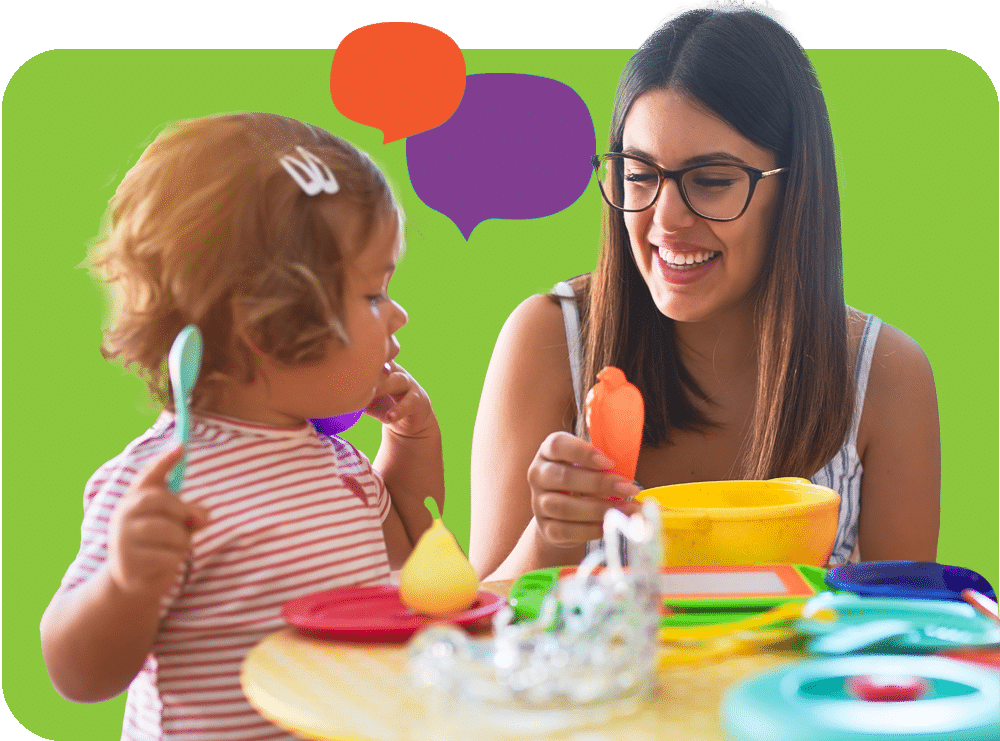
Try LENA’s Talking Tip #1: Talk about what you’re doing and thinking. “I’m giving you some more green beans. They’re a little crunchy!”
Or Talking Tip #2: Comment on what they’re doing or looking at. “Mmmm, warm milk.”
Or Talking Tip #11: Repeat and add to what they say and do. “You want more blueberries? Those are big blueberries!”
Transitions: The Moments That Slip by the Fastest
“Proximity does not always equal engagement.” — Maisah Williams-Foote, Director of Organizational Effectiveness, Council for Professional Recognition
Children in child care may experience dozens of transitions each day. It may be even more for infants and toddlers. Every one is an opportunity for conversation.
You’re likely already in close proximity to infants and toddlers during transitions. Many teachers like to use that time to be intentional with conversational turns, pausing to wait for a response after you make a comment or ask a question. In fact, that pause is everything.
Try Talking Tip #7: Wait for their response. “We’re all done with breakfast. Let’s wipe those hands. How does that feel?”
Or Talking Tip #5: Touch, hug, hold. “All done in the bouncy seat! Here comes a lift! Up we go. Wee!”
Or Talking Tip #10: Take turns — don’t do all the talking. “It’s chilly outside. Do you want your hood on?”
Responsive Care During Outdoor Play: Time To Talk
Outside time is an opportune time for responsive interactions and responsive care. Even with their safety in mind, there is still space to spark conversations.
For toddlers, opportunities are everywhere. Try Talking Tip #12: Follow their lead, do what interests them. Crouch down beside a child watching a bug move through the grass. “What do you see? Where is it going?”
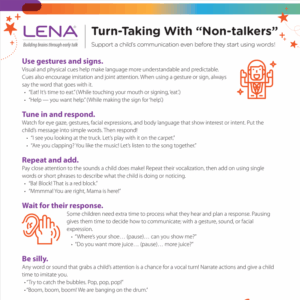
For infants in strollers or carriers, try Talking Tip #6: Tune in and respond to what they look at, do, and say. “Do you hear that bird? I see it up in the tree! Tweet! Tweet!” Wait. Watch their face. A widened gaze, a tightened grip on your finger, and then a vocal response — that is the turn. Check out LENA’s “Turn Taking With Non-Talkers” resource for more conversation guidance with babies who are pre-verbal.
Want to go deeper? LENA offers free mini-courses, including ones focused specifically on talking with infants and toddlers. Check them out.
Every Moment Is Already the Work
The lunch table, the diaper change, the walk to the playground. This is where a lot of toddler and infant development can happen! In the everyday, in-between moments.
One more turn than yesterday. That’s the goal. LENA Grow can show you.